Why Are British Shorthairs So Calm? The Actual Biology Behind Their Legendary Chill
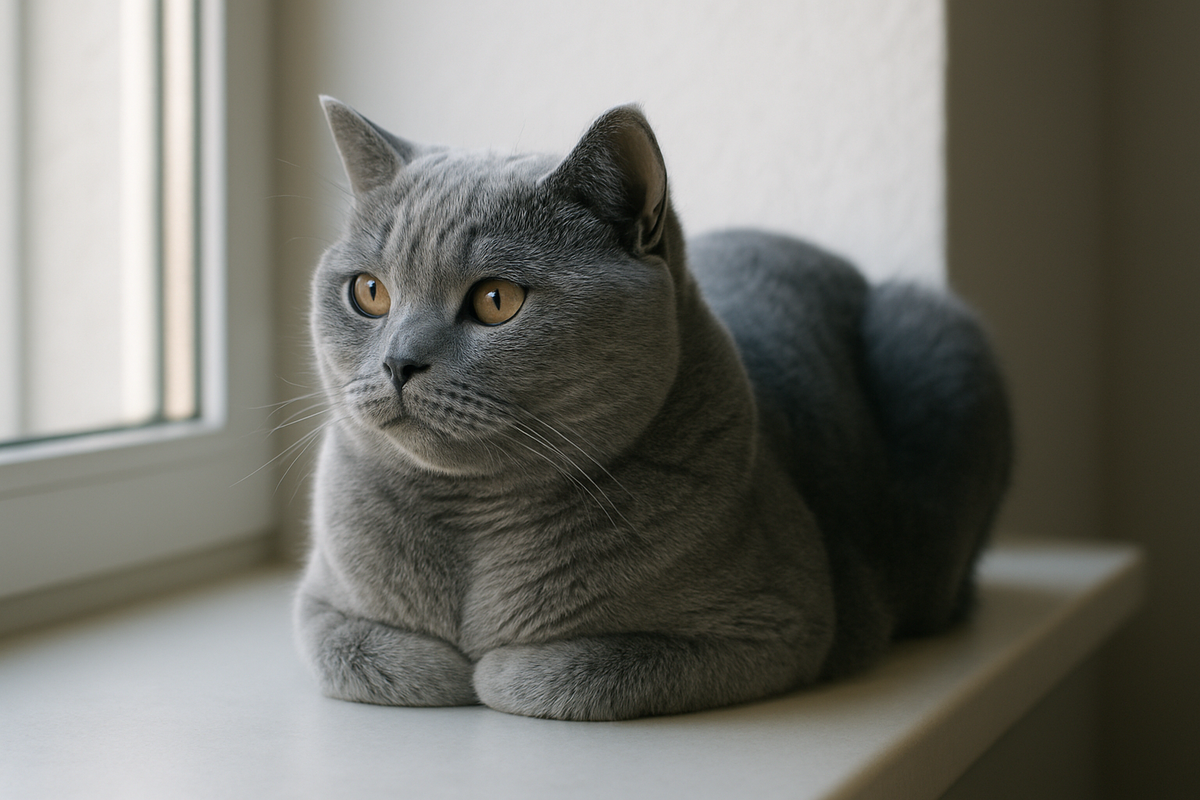
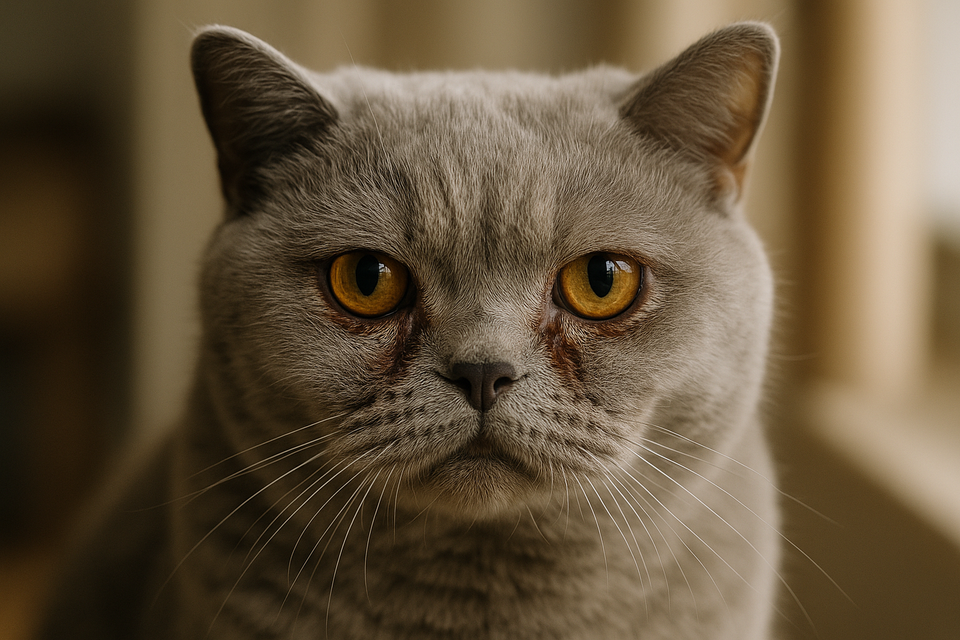
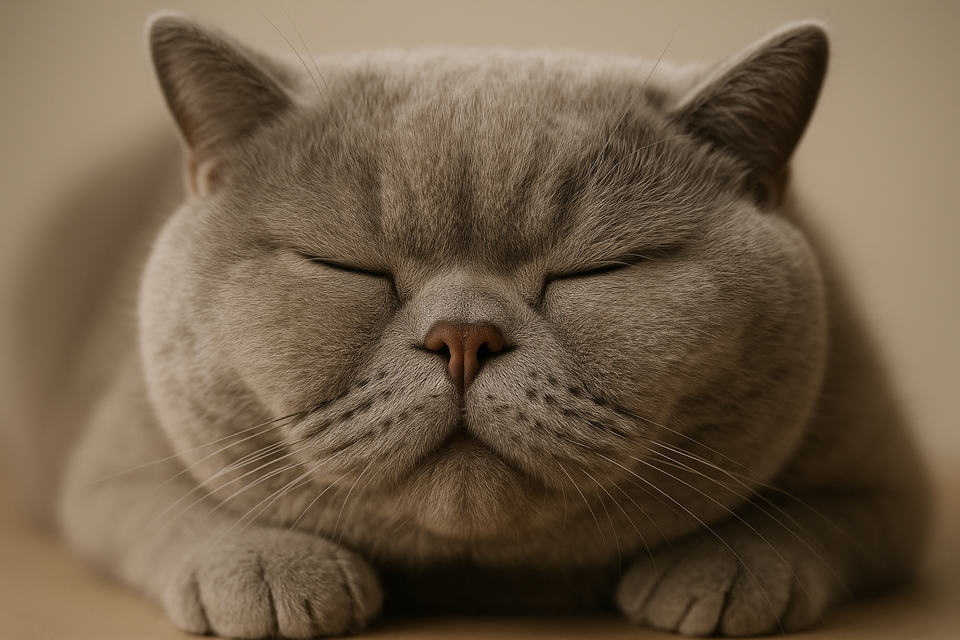
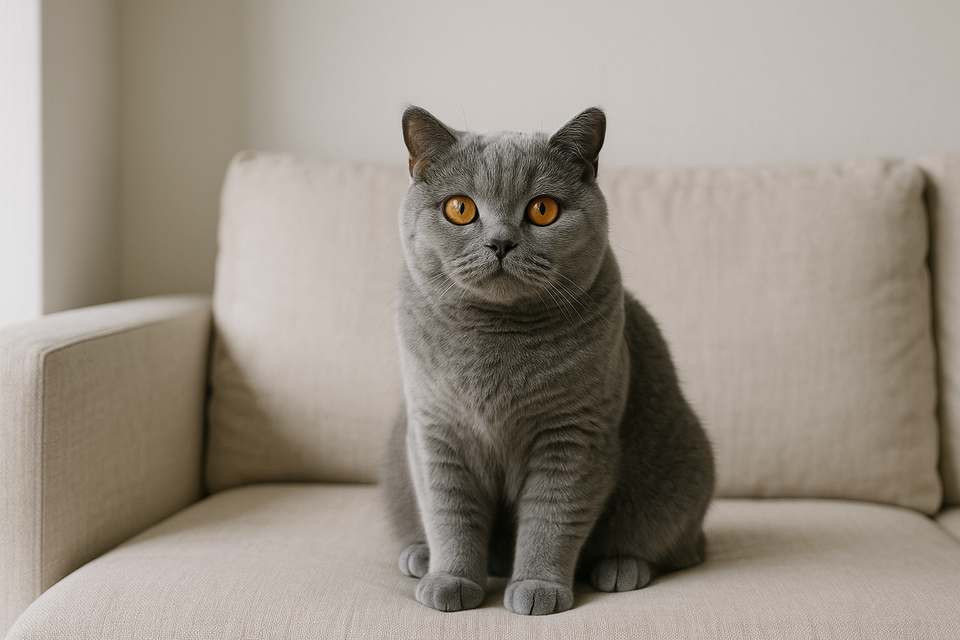
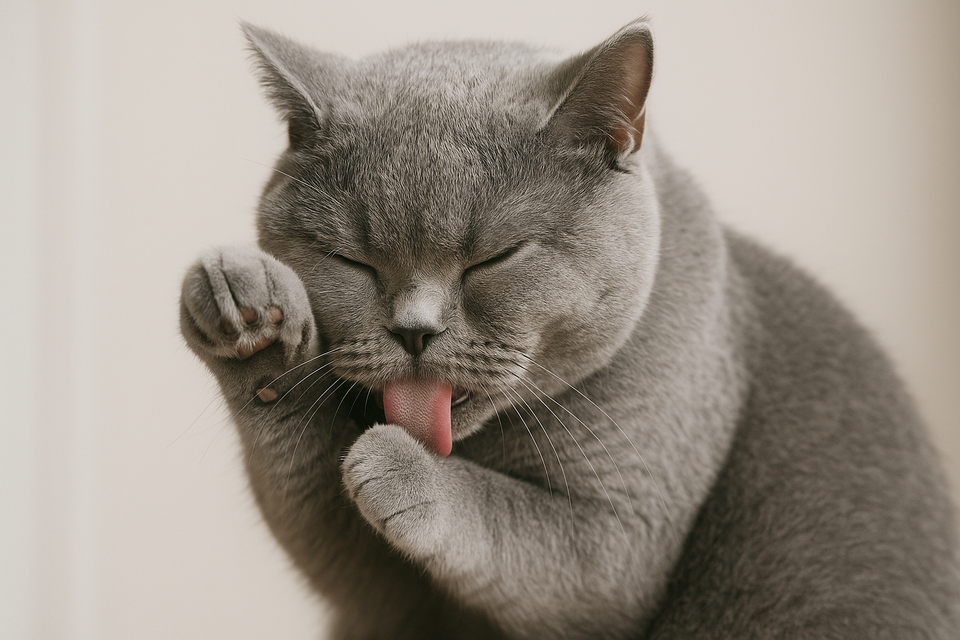
Something happens when you live with a British Shorthair. Other people's cats sprint across the ceiling when the vacuum cleaner comes out. Yours watches it from the armchair with the mild interest of someone reading a newspaper. Guests arrive and most cats vanish; yours stays, assesses the situation, determines nothing alarming is happening, and returns to being a decorative loaf.
If you've wondered why are British Shorthairs so calm — genuinely wondered, not worried — you're not alone. It's one of the most common questions new BSH owners ask, usually with a note of delighted disbelief: "Why is my British Shorthair so relaxed compared to every other cat I've known? Is this a genetics thing? Is it 150 years of selective breeding? Is it something in the brain?"
The answer, it turns out, involves all three.
What the science actually says about why British Shorthairs are so calm
The largest breed study ever run on cat behaviour puts BSH at the extreme end of calm
In 2019, a team of Finnish researchers led by Milla Salonen published one of the most rigorous studies of feline breed differences in behaviour ever attempted. They collected owner-reported temperament data on 5,726 cats across 40 breeds, ran logistic regression models controlling for age, sex, living environment, and a range of other variables, and mapped which breeds reliably showed which traits.
British Shorthairs came out at the extreme end of the calm spectrum. The study found they had the highest probability among all breeds studied for decreased contact-seeking — not in an anxious or withdrawn way, but in a characteristically undemanding, self-contained way. They also ranked among the lowest in aggression and fearfulness. This was not based on a handful of owners reporting what they wanted to believe about their cats. It was a statistically robust signal across thousands of animals, published in Scientific Reports (a Nature journal).
About half of a cat's temperament is genetic
Research into British Shorthair temperament science confirms something important about where this calm comes from: it is substantially heritable. Studies have found heritability estimates in the range of 0.40–0.53 for traits like aggression and fearfulness in cats — meaning roughly 40–50% of the variation in these traits between individual cats can be attributed to genetics.
A note of precision: those estimates were calculated for Ragdoll, Maine Coon, and Turkish Van populations in the Salonen study, not for British Shorthairs specifically. But the consistency of BSH behaviour across vastly different households, countries, and environments is strong circumstantial evidence that the same pattern holds for the breed.
The neuroscience: serotonin pathways and oxytocin receptors
What's actually happening in the brain of a calm cat? The short answer is that researchers are still piecing it together — but the pieces are pointing in an interesting direction.
A 2020 review by Travnik and colleagues of proximate mechanisms in feline temperament adds biological depth. Researchers have identified that the serotonergic system — the brain's serotonin network — plays a role in aggression regulation in cats. Separately, a 2017 study by Arahori and colleagues found that microsatellite polymorphisms adjacent to the oxytocin receptor (OXTR) gene show associations with personality dimensions in domestic cats. The oxytocin receptor is the same gene linked to social bonding and calmness in humans and dogs.
These findings point toward a plausible neurobiological picture of why some cats are calmer than others. But to be clear: this research was not conducted on British Shorthairs specifically, and the OXTR study used a small sample of 40 cats. The connection to BSH calm is inferred from broader feline science, not confirmed by BSH-specific study. The research is pointing in an interesting direction — it has not yet arrived at a definitive mechanism.
150 years of deliberate selection for calm
British Shorthair personality genetics didn't emerge in a lab. They were shaped by human selection going back to 1871, when Harrison Weir — credited as "the father of the cat fancy" — organised the world's first cat show at London's Crystal Palace and established written standards for what British cats should look and behave like. Docility. Pleasant disposition. An unflappable nature. These were explicit selection criteria from the very beginning.
More than 150 years of breeders prioritising those traits has compounded the selection. Human-directed evolution, layered on top of whatever pre-existing calm disposition the founding population carried.
What this means for you and your BSH
Your cat's unruffled response to strangers, sudden noises, and household upheaval is not coincidence and not a training achievement — it's genetics and a century and a half of deliberate selection working in the same direction.
That said: this is a breed average, not a guarantee. Individual British Shorthairs vary. Some will be more curious or higher-energy than the breed norm; some calmer. What the research tells us is that when you look at the breed as a whole, BSH consistently sit at one end of the temperament spectrum — less aggressive, less fearful, and notably less contact-demanding than almost every other breed studied.
The "less contact-demanding" part is worth understanding, because it can puzzle owners used to attention-seeking cats. BSH tend to show affection through proximity — staying in the same room, watching what you do, sitting nearby rather than on top of you. Researchers are still working out whether this reflects lower sociability, a distinct attachment style, or a different social communication system. What is clear is that it is part of the same stable, self-possessed temperament package.
Their calm also has a practical dimension: BSH tend to adapt well to indoor living, handle new environments without excessive stress, and coexist reasonably with changes in routine. The same biological disposition that makes them look unimpressed by everything applies usefully here.
One thing to keep an eye on: a calm BSH won't loudly protest boredom or inactivity — they'll just sit very still and very quietly. For BSH who are gaining weight despite careful feeding, that quietness can mask the problem. Our guide on British Shorthair weight covers how to assess whether your cat's build is on track.
What you can do with this knowledge
-
Don't mistake calmness for indifference. British Shorthairs are not aloof; they are self-possessed. A BSH that sits across the room watching you rather than demanding lap time is behaving normally — not signalling a problem that needs solving.
-
Let them initiate physical contact. BSH who are offered a hand to sniff before being picked up, or allowed to approach on their own terms, typically engage more willingly than those who are pursued. This isn't a training technique — it's working with how their temperament is already wired. You'll notice the difference once you stop reaching for them and start waiting.
-
Don't read calm as low-need. A relaxed BSH still needs mental stimulation, play, and environmental enrichment. Their steady temperament doesn't mean they don't get bored — it means they'll cope quietly rather than yowl about it. Puzzle feeders, vertical space, and regular structured play are worth building into the routine regardless of how undemanding your cat appears.
-
Use their calm as a baseline. Because BSH are reliably steady, any meaningful shift in behaviour is informative. A cat that is suddenly more anxious, unusually clingy, or persistently restless is telling you something — and it's worth listening. Proactive health monitoring matters for this breed across several fronts — including British Shorthair heart health, where early detection makes a real difference. Their steadiness is a gift precisely because it makes deviation visible.
-
When buying or adopting: ask about temperament across generations. Given the moderate heritability of feline temperament traits, a kitten from consistently calm, well-socialised parents is a meaningful signal. Reputable breeders know their lines' temperament histories and will discuss them.
What we still don't know
The Salonen et al. 2019 study is the strongest evidence we have — and it is genuinely strong data. But several important questions remain open:
- Which specific genes drive BSH calm? No genome-wide association study (GWAS) focused on British Shorthairs has been published. We know temperament is heritable in cats; we don't yet know which loci are responsible in BSH specifically.
- Is the breed's calm rooted primarily in the Victorian founding population, post-WW2 Persian outcrossing (used to rebuild the breed after wartime losses), or both? The history is documented; the genetics of which breeding decisions drove which traits have not been untangled.
- Why do BSH show the highest rate of decreased contact-seeking of any breed studied? Is this lower sociability, a distinct attachment style, or a different social communication system? The behavioural signal is robust; the mechanism is not yet understood.
- How does individual variation within the breed map to genetics? Some BSH are noticeably calmer than others. Whether that variation has identifiable genetic predictors has not been studied.
The science is solid at the population level. The molecular picture is still being assembled.
Sources
-
Salonen, M., Vapalahti, K., Tiira, K., Mäki-Tanila, A., & Lohi, H. (2019). Breed differences of heritable behaviour traits in cats. Scientific Reports, 9, 7949. https://doi.org/10.1038/s41598-019-44324-x
-
Travnik, I.d.C., Molento, C.F.M., & Braga, J.S. (2020). Temperament in Domestic Cats: A Review of Proximate Mechanisms, Methods of Assessment, Its Effects on Human–Cat Relationships, and One Welfare. Animals, 10(9), 1516. https://doi.org/10.3390/ani10091516
-
Arahori, M., Hori, Y., Saito, A., Chijiiwa, H., Takagi, S., Nagasawa, M., Fujita, K., & Hasegawa, T. (2017). Microsatellite Polymorphisms Adjacent to the Oxytocin Receptor Gene in Domestic Cats: Association with Personality? Frontiers in Psychology, 8, 2165. https://doi.org/10.3389/fpsyg.2017.02165
Note: a sudden change in your British Shorthair's typical calm behavior — increased anxiety, hyperactivity, or unusual clinginess — may be worth a vet check, as behavioral change can signal pain or illness.
For more on British Shorthair health, see our guide on British Shorthair dental problems.
If your British Shorthair’s calm temperament extends to near-constant lounging, read our breakdown of British Shorthair sedentary behaviour to understand the line between breed-typical chill and inactivity that needs attention.